The Taliban Express
Uzbekistan is planning a railway across Taliban-controlled Afghanistan and through an active war zone. The strange part is this may be exactly what they intended.
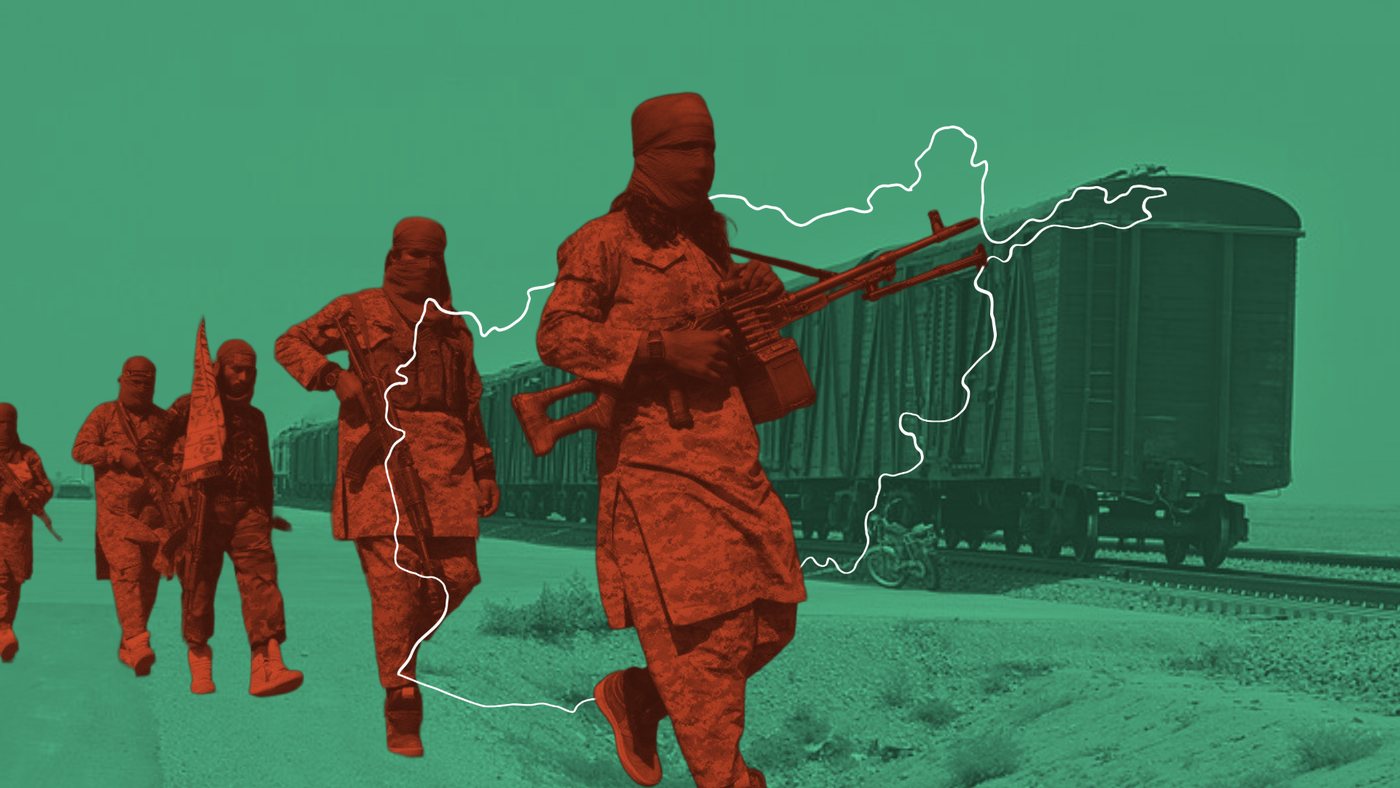
In February, the Pakistani air force struck Kabul, Kandahar, Paktia, Paktika and Nangarhar. The UN said around 143 people died in a single strike on a drug-treatment centre in the capital, with the Taliban putting the death toll as high as 400. It was the first time Islamabad had gone after the Taliban itself rather than the militants it harbours.
On 4 February, in the middle of all this, Uzbek president Shavkat Mirziyoyev signed a decree launching the feasibility study for a railway from Termez in Uzbekistan, through Kabul, to the Pakistani border. Three weeks ago he and Pakistani PM Shehbaz Sharif met at the SCO summit in Kyrgyzstan and agreed to speed it up.
So why is a $7 billion railway being built by three countries, while two of them are at war?
An escape route from geography
Uzbekistan is one of only two doubly landlocked countries on earth: every one of its neighbours is landlocked too. Uzbekistan’s exports must cross at least two sovereign borders to reach a ship, and the existing options run through Russia, through Iran, or the long way west across the Caspian. For a country trying to become a manufacturing hub, that is more than an inconvenience, it’s a ceiling to its ambitions.
The proposed Termez–Naibabad–Maidan Shahr–Logar–Kharlachi line, roughly 650 to 760km, would run to the Pakistani ports of Karachi, Gwadar and Port Qasim. Officials reckon it would cut transit times from around 35 days to three to five, reduce transport costs by at least 40% and eventually carry up to 20m tonnes of cargo a year.
The Astana Times, 21 July 2025 · astanatimes.com · Ariana News, June 2026 · ariananews.afThe gold line is the 75km Uzbekistan built in 2011 and is now restoring. Both proposed corridors are drawn along their announced alignments; neither is under construction. Toggle any route off to compare.
Thirty-five days to five is not an incremental gain. It is the difference between being a peripheral economy to being connected to global trade, and with Uzbekistan’s accession to the WTO coming up soon, it’s why Tashkent has spent eight years refusing to let the idea die.
There is already a train
Most coverage misses that Afghanistan has about 104km of working railway in the entire country, and the most important stretch of it is Uzbek.
The 75km Hairatan–Mazar-i-Sharif line was built by Uzbekistan and opened in 2011. In August 2024, under a contract between Uzbekistan Temir Yullari and the Afghanistan Railway Authority, Uzbek specialists began restoring it; Naibabad station was rebuilt and reopened to receive freight wagons, and volumes on the corridor are rising.
Logistics Cluster, Afghanistan railway assessment · lca.logcluster.org · Afghanistan International, April 2026 · afintl.comSo Uzbekistan is not proposing to build an entirely new railway in Afghanistan. It has already built one, and is quietly upgrading it while the bombs fall further south. Hairatan is the northern end of the grand corridor which has a modest line that already runs. That makes the project harder to dismiss as just a fantasy, and it is the strongest card Uzbekistan currently holds.
The Taliban have their own reasons to want the rest of it. Control of construction zones and transit nodes would eventually let Kabul levy fees, lease land and attract investment. More immediately, it gives them something far scarcer: people obliged to talk to them. Someone has to survey the route, settle the gauge, secure the sites and agree where the stations go. The Taliban have no embassy in Tashkent or Islamabad. But they now have a railway authority, with a chief executive in post since March 2022 and a cabinet that has met to decide track gauge.
Functional recognition
Central Asia has found a way of dealing with the Taliban that the west hasn’t. Not diplomatic recognition, which is expensive and hard to reverse, but the technical sort, which is cheap and accumulates. You can run a border crossing without opening an embassy, sign a railway contract without recognising a government, send engineers instead of an ambassador. Kazakhstan struck the Taliban from its list of terrorist organisations, Uzbekistan signed an agreement on managing the Amu Darya, and Russia sent its security council secretary to Kabul. None of it is recognition, but of it makes dealing with Kabul progressively easier.
Mind the war
The difficulty is that the railway's route is also the war's.
- July 2023
The three governments agree the Termez–Naibabad–Maidan Shahr–Logar–Kharlachi alignment, dropping the earlier route through Torkham.
- 17 July 2025
Transport ministers sign a framework agreement in Kabul on a joint feasibility study. Uzbek officials say the Taliban have given them security guarantees.
- October 2025
Pakistani airstrikes on Kabul trigger the deadliest border clashes since 2021. Border crossings close for more than three months.
- 28 January 2026
Kazakhstan's ambassador in Islamabad offers to finance a rival link to Pakistani ports through Afghanistan.
- 4 February 2026
Mirziyoyev decrees the launch of the joint feasibility study.
- February 2026
Pakistan strikes five Afghan provinces, hitting the Taliban government directly for the first time.
- May 2026
Russian Railways says it will conduct the technical studies jointly with Uzbekistan.
- August 2026
Pakistan’s Sharif and Uzbekistan’s Mirziyoyev meet at the SCO summit and agree to accelerate.
Sources: The Times of Central Asia; Eurasianet; The Astana Times.
That pattern is odd. Every acceleration since 2023 has come within weeks of an escalation. February 2026 contains both the heaviest strikes of the war and the decree that formally started the study.
The closures were not just symbolic either. Some 10,000 containers sat stranded between October 2025 and April 2026 at demurrage of about $120 per container per day; Pakistan lost around $106m. Nor is the alignment incidental to the fighting: the route runs through Logar and into Kurram and Khyber Pakhtunkhwa, precisely the ground at the heart of Islamabad's quarrel with Kabul over Tehrik-i-Taliban Pakistan. The corridor requires Afghan–Pakistani co-operation, but its route journeys directly through the most contested regions.
What the corridor promises
- Transit from 35 days to three to five, and costs down by at least 40%.
- Up to 20m tonnes a year, and a direct Central Asian route to the Arabian Sea.
- A working Uzbek-built railway already running from Hairatan to Mazar-i-Sharif.
- Political commitment from all three governments, sustained through open war.
- Afghanistan's first real transit revenues; Pakistan's way into Central Asian markets.
What stands in the way
- No construction financing has been secured.
- Estimates have run from $4.6bn to $8.2bn.
- The route passes through the insurgency at the centre of the war.
- Development banks and Gulf investors will not move while Kabul and Islamabad are hostile.
- No railway across a front line can be insured.
Nobody has bought a ticket
Figures reported at different dates by different governments.
The money to lay the track has not been committed. Uzbekistan hopes China might contribute; Russia has been discussing options; talks with development banks continue. Analysts expect the Asian Development Bank and Gulf investors to hold off while Pakistani–Afghan relations remain hostile.
Train of Thought railway analysis · trainof-thought.com · Caspian Post, March 2026 · caspianpost.comA feasibility study is a commitment to investigate, not to build. This railway has been remarkably good at producing the former without securing the latter.
The race with Astana
Kazakhstan isn’t just going to wait on the platform; it's going to build an alternative.
Astana is promoting a western corridor from Turgundi through Herat and Kandahar to Spin Boldak: more than 900km, but over largely flat ground, against an Uzbek route that must cross the Salang Pass. Kazakhstan has committed around $500m, starting with the 115–120km Turgundi–Herat section, a logistics hub at Herat intended as a dry port for Kazakh cargo, and fibre-optic cable along the route. A joint railway company with Turkmenistan and Afghanistan has also been proposed, headquartered in Astana.
Jamestown Foundation, June 2025 · jamestown.org · CACI Analyst, March 2026 · cacianalyst.org · The Times of Central Asia, December 2025 · timesca.comThe Uzbek route is the strategically better one, because it serves Uzbekistan's economy rather than merely passing through it. The Kazakh route is flatter, avoids Kabul and Kurram, and is funded.
Iran, meanwhile, is finishing the Khaf–Herat line and would like Afghan freight routed to Chabahar, their port in the Gulf of Oman. Turkmenistan has already broken ground at Torghundi for this. Afghanistan has been folded into the China–Pakistan Economic Corridor, with everyone building towards the same country from a different direction. The contest is not whether Afghanistan gets a railway; it’s which railway gets Afghanistan.
A train to nowhere
Interestingly, the project may not be surviving the war so much as feeding on it.
Feasibility studies are cheap; $7bn of track is not. Yet the scheme pays Tashkent before the track is built. It keeps Uzbekistan useful to Islamabad and Kabul, and keeps Beijing, Moscow and Astana attentive to Uzbek needs. It pays for Kabul too, in officials, engineers and businessmen who must treat the Taliban as an institution, and as a legitimate government. The political returns arrive well ahead of the trains, which would explain a project that is never cancelled and never begun.
Three things are worth watching: whether any lender is ever named, whether the border crossings at Torkham and Chaman stay open for the year (because investors will not believe in trains crossing a border that lorries cannot), and whether Kazakhstan breaks ground at Turgundi before Uzbekistan builds south of Mazar.
The first kilometre of track will say more than any feasibility study. Until then the Taliban Express remains what it has been since 2018: delayed.
Written 3 September 2026. Sources: The Times of Central Asia, Eurasianet, The Astana Times, Jamestown Foundation, CACI Analyst, Geopolitical Monitor, Ariana News, Caspian Post, the Logistics Cluster and Afghanistan International.