ProjectLandlocked — the future of Central Asia

Nobody is choosing

Five landlocked states are being courted by three Western powers, two rival technology blocs, and the two neighbours they cannot leave. The striking thing is how few of them are picking a side — and how well that is working for them.

Select a country

Tap any territory for its current alignment position.

Boundaries from Natural Earth 1:50m public-domain data, projected equirectangular with a standard parallel at 45°N and simplified for display. Route alignments are indicative, drawn through real waypoints rather than surveyed.

The argument

Since November 2025 this region has acquired a United States leaders' summit, an EU strategic partnership, a British ministerial format, an Abraham Accords signatory, and seats in both of the world's competing technology blocs. Read as a run of headlines, it looks like a pivot westward.

Read against what happened with Moscow over the same months, it looks like something less dramatic and more interesting. In the year Tokayev publicly asked Putin to stop the war in Ukraine, Kazakhstan also recorded its highest-ever trade with Russia, signed a currency swap, and agreed to have Rosatom build two nuclear units. Nothing was traded away. The Western gains were additions, not substitutions.

So the organising question of this brief is not whether Central Asia is turning west. It is not. The question is what a middle power should do with a region that has become very good at accepting offers from everyone — and whether the West's current instinct, which is increasingly to demand exclusivity, is the right response or precisely the wrong one.

The argument is set out across , published as it developed. This page is the standing summary.

Why the brief is called Landlocked

Every state here is landlocked, and Uzbekistan is one of only two countries on earth that is doubly landlocked — every one of its neighbours is landlocked too. That is not trivia. It means no government in the region can reach a customer without a third country's consent, which is why Kazakhstan can criticise Moscow publicly and still be unable to act on the criticism. Geography sets the ceiling on how far any realignment can go, and most commentary on this region ignores it.

≈80%of Kazakh oil exports run through one Russian-transiting pipeline
$29bnrecord Russia–Kazakhstan trade in 2025 — the year Tokayev broke with Moscow in public
4 of 5Central Asian states that joined China's AI bloc in July 2026
1 of 5that joined America's

The five states are not moving together

A structural divergence is opening up. Kazakhstan and Uzbekistan have the diplomatic bandwidth, the reserves and the reform record to be courted. Kyrgyzstan, Tajikistan and Turkmenistan largely do not, and Western concentration on the top two risks pushing the other three toward Moscow and Beijing by default. The country data behind that divergence is set out in the next section.

Five states, one label, very little in common

Treating Central Asia as a bloc is the first analytical error. A country where remittances are half of GDP and one that supplies two-fifths of the world's uranium do not have the same interests, the same leverage, or the same room to manoeuvre.

The comparison that matters

Remittances and growth: World Bank open data, 2024 values. Median age: UNICEF, Generation 2050 in Central Asia, November 2025, 2025 values. Turkmenistan remittance data is not published by the World Bank and is shown as unavailable rather than estimated.

CountryMedian age (2025)Remittances, % GDP (2024)GDP growth (2024)Defining endowment
Kazakhstan29.70.1%5.0%Uranium, oil, rare earths, the transit landmass
Uzbekistan27.014.4%6.5%Population, gold, copper, the most diversified economy in the region
Turkmenistan26.9not published6.3%Natural gas — reserves ranked fourth in the world
Kyrgyzstan25.426.6%9.0%Hydropower, gold, and an unusually open political system by regional standards
Tajikistan22.247.9%8.4%Hydropower — and the deepest labour dependency on Russia anywhere in the region

The single most important number on this page

Remittances were 47.9% of Tajikistan's GDP in 2024 and 26.6% of Kyrgyzstan's. Over 80% of migration flows from both countries went to Russia as of 2023. No Western package of any plausible size substitutes for that. Any strategy that ignores labour mobility is not addressing the binding constraint on those two states.

Uzbekistan is the region's largest population at over 38 million, one of only two doubly landlocked countries in the world, and the only state bordering all four other Central Asian countries as well as Afghanistan. Real GDP grew 7.7% in 2025, exports rose 24% led by gold, copper, zinc, uranium goods, food and fertilizers, and international reserves reached $70bn.

World Bank country overview · worldbank.org

Kazakhstan produced about 25,839 tonnes of uranium in 2025, roughly 40% of world output, and is moving deliberately up the value chain — a fuel pellet fabrication plant opened in 2021 and reached its 200 tU/year design capacity in 2024. In an October 2024 referendum, 70% of voters backed new nuclear energy.

World Nuclear Association country profile · world-nuclear.org

Turkmenistan holds proven gas reserves ranked fourth globally after Iran, Russia and Qatar, with the Galkynysh field alone accounting for the large majority of the national total. Reserve estimates vary widely between auditors and official statements, and Ashgabat has at times claimed figures far above independent assessments.

Oil & Gas Journal · ogj.com — note this assessment is a decade old; VOA has separately documented the gap between Turkmen claims and audited estimates.

Tajikistan and Kyrgyzstan hold no significant fossil fuel reserves but sit on the bulk of the region's hydropower potential; Central Asia as a whole accounts for around 5.5% of world hydropower potential, most of it undeveloped. This is the basis of the region's water–energy bargain: upstream states hold the water, downstream states hold the gas.

Peer-reviewed analysis in Economic Analysis and Policy · sciencedirect.com; World Bank Central Asia Energy-Water Development Program.

Country by country

ProjectLandlocked — the future of Central Asia

The posts

deKilpeck

deKilpeck

My research and writing on foreign policy, politics, culture and the places that don't get written about enough.

Latest

Projects and tools

Writing

Everything published across the site, newest first.

Project
Tool

Headroom

The Chancellor has about £24bn of room under the fiscal rules. Build a programme and see whether it fits.

Headroom is a fiscal simulator built on the OBR’s March 2026 forecast and HMRC’s ready reckoner. Choose measures on pensions, welfare, immigration, young people, defence and planning, move the four main tax rates along their Laffer curves, and see what is left of the Chancellor’s headroom in 2029–30 and where debt goes. Every figure is labelled as sourced, estimated or illustrative.

404

Nothing here

The page you asked for doesn’t exist, or has moved. The address may have been mistyped, or a post may have been retitled.

or .

About

Harry Pye

I am an international relations student from Wales, based in London. I write on foreign policy and policy design, with a particular interest in the places that sit at the edge of Western attention and the institutional questions that decide what happens there. I also write about British, Welsh, and European politics and culture.

Contact

I am glad to hear from readers, and particularly glad to be told where I have got something wrong.

Andy Burnham is not the cure for Versailles syndrome

Britain has changed prime minister six times in a decade and changed nothing that matters. The affliction was never about who was crowned.
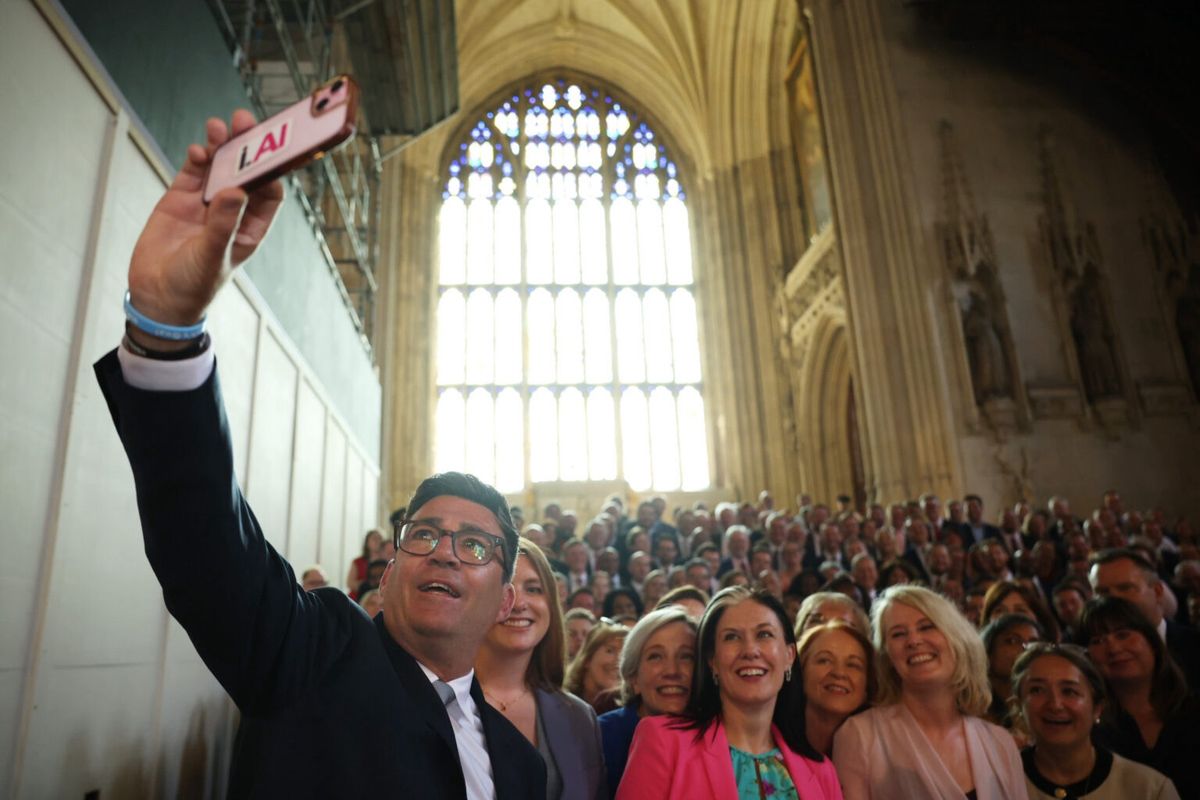
Andy Burnham photographs himself with Labour MPs in Westminster Hall. Credit: Getty Images.

Andy Burnham was installed as Britain's 59th prime minister on 20 July after King Charles invited him to form a government at Buckingham Palace. He is the seventh person to hold the office in a decade, and the only candidate in the leadership contest that put him there, having secured 379 of 403 nominations from Labour MPs. In his first remarks outside Downing Street, he called his own arrival "a circuit-breaker", the man who would finally short the loop of collapsing premierships and restore, in his words, stability.

It is a seductive pitch, not least because Burnham has spent nine years building the one credential Westminster cannot manufacture for itself: distance from it. He left the Commons in 2017 to run Greater Manchester, styled himself the "King of the North," brought the buses back under public control, and returned to SW1 this month trailing the aura of a man who never really belonged there. After Cameron, May, Johnson, Truss, Sunak and Starmer, the country has been offered, one more time, the outsider who will finally fix what the insiders broke.

He won't. Because the thing that needs fixing isn't necessarily who sits in Downing Street. It's the court around it. And Burnham, for all his Mancunian distance, is a creature of that court in every way that matters.

Versailles was not simply a palace; it was a society in of itself. Louis XIV built it to pull the French aristocracy off their own estates and away from the people who worked them, and to keep them there, dependent on royal favour. Competing for proximity to the King, they became increasingly unable to see France except through the gossip of the corridors. The nobility didn't rule from among their tenants anymore. They ruled, or rather postured, from inside a gilded box a few miles outside Paris, and the box slowly replaced the country in their minds.

Britain's aristocracy took a different path for most of its history. The Lords, the Tory squirearchy, even the grandees of Victorian and Edwardian politics, largely still lived among the people they governed from their country estates for a good part of the year. It was a paternalistic, unequal, often high-handed relationship, but it was not a sealed one. The people running the country's ideas and Parliament's ideas of the country had to survive contact with something other than each other regularly.

That is no longer true of London. Westminster, Whitehall, the press lobby, the think tanks that write the policy nobody voted for, the special advisers who become MPs who become ministers who become pundits and back again. This is now a closed circulatory system with its own restaurants, its own marriage market, its own shared reference points, and remarkably little need to leave the M25. It is our contemporary Versailles: a self-referential court, physically inside the country but functionally sealed off from it.

Revolutions happen when a court convinces itself its own consensus is the nation's consensus, right up until it isn't. Brexit was Britain's version of the gates coming down, a vote that expressed, more than any single policy grievance, the sense that the people running things had stopped living among the people they ran. It was received in SW1 as a shock precisely because the court hadn't heard it coming; nobody in the palace had.

But storming a palace and dissolving a court are two different acts, and Britain has only managed the first. A decade on, the personnel have been replaced at a startling rate, six changes of prime minister since 2016, an entire cabinet's worth of ministers cycling through, and yet the complaint that animated 2016 has, if anything, hardened. People do not feel that the distance between London and the rest of the country has closed. They feel that they replaced the faces at court without changing the system itself.

This is why Britain has now had seven prime ministers in ten years without anything that looks like a settlement: the churn is mistaken for reform. Each departure is treated as proof the old resident had failed and each arrival as the fresh start, when the more honest reading is that the palace itself absorbs and neutralises whoever walks into it, regardless of their biography going in.

Burnham's biography reads, on the surface, like the answer to exactly this problem. Manchester, not Islington. A metro mayor's operational grip on buses and housing, not a special adviser's grip on a script. "King of the North" as a brand built in deliberate opposition to the SW1 postcode.

Look past the biography, though, and the mechanism of his arrival is pure court politics. He did not win a general election or even a contested leadership ballot open to a wider selection of the public; he was selected, essentially unopposed, by 403 Labour parliamentarians, the same class of people who selected his five immediate predecessors, several of whom were also once presented as 'the change candidate'. That is not the country reaching into the provinces and pulling out a leader. That is the palace choosing, once again, whom to let in through its own front door, this time reaching for a face that photographs well outside the M25.

Nor did nine years as mayor leave Burnham outside the system in any structural sense. The devolution settlement that gave Greater Manchester its mayoralty is itself a Westminster grant, powers and budgets handed down from the centre, revocable by the centre, negotiated in rooms in the centre. Running a combined authority under that settlement is a job done in constant, deferential dialogue with the very court he is now supposed to be curing us of. He has spent nearly a decade as one of Versailles's most favoured provincial governors, not as someone who rejected the system.

None of which makes him a bad prime minister by definition. It makes him the wrong kind of answer to the question the country is asking. The problem was never that the wrong individual held the job. The problem is a governing class that lives, dines, marries, is educated, is employed and retires almost entirely within a few square miles of itself, and mistakes that closed loop for the nation it governs. Changing the face on Downing Street's door does nothing to that loop. Only changing where power physically sits, dispersing it out of SW1 in a way that isn't a discretionary gift from the centre, on terms London can revoke whenever a chancellor is short of money, would.

Regardless of Burnham's performance as prime minister, if the country is waiting for him to cure Versailles syndrome, it will wait as long as it waited for the six who came before him. The affliction was never about who was crowned. It was, and remains, about the palace itself.

Admin

Sign in to write and publish.